A sign of the universality of the ability to learn and practice the TM technique and the ubiquitous appreciation of its value is illustrated by the diverse and unique locations, cultures and circumstances in which it has been taught. From Maputo to Moscow to Manhattan to Madrid to Medellin to Melbourne to Manila, people in all walks of life have embraced the TM technique. The program has been implemented in schools, hospitals, prisons, government offices, industry,
the military, and private organizations over seven decades. Here are some of the more notable settings:
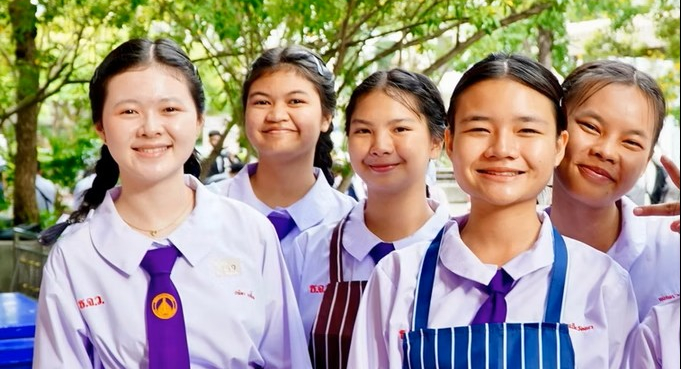
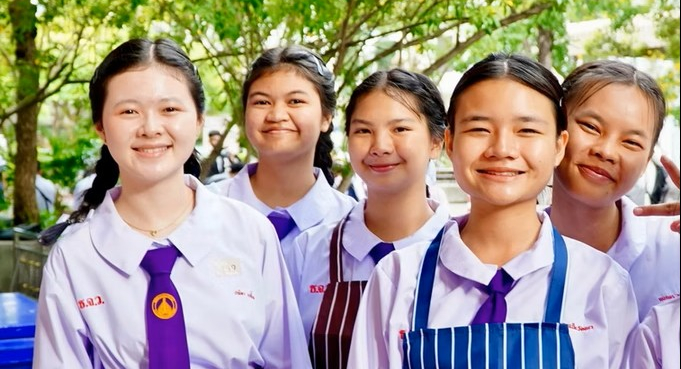
The Dharmajanee School in Thailand (pictured)
This award-winning school began in 1990 when Buddhist nuns working in an impoverished area in Ratchaburi saw that impoverished boys could receive a safe home, food, and education in a Buddhist temple but similarly disadvantaged girls had little or no opportunities. The nuns constructed dormitory and classroom buildings and began teaching 20 vulnerable girls aged 12 to 15. Since 1990, more than 5,700 girls living in extreme poverty, orphans, or those from broken homes have come to the Dhammajarinee Witthaya School. There are now over 1,000 Buddhist and non-Buddhist students enrolled, from kindergarten to 12th grade. All students at Dhammajarinee receive, without charge, a safe and loving home, food, clothing, and medical care. All receive instruction in the Transcendental Meditation program.
Unified Behavioral Health Center for Military Veterans and Their Families
Located in Bay Shore, the study was conducted before publication in 2022 in the Journal of Traumatic Stress in 2022. Military veterans diagnosed with PTSD participated in a randomized controlled trial comparing TM with prolonged exposure therapy, a standard PTSD treatment. This is often considered one of the strongest military-related TM studies because it was a randomized controlled trial conducted through a clinical center dedicated specifically to military veterans and their families. Improvements were noted in PTSD symptoms, depression, anxiety, sleep quality, emotional well-being, quality of life, and stress resilience.
Central Saanich Police Service
This program for women officers in British Columbia, Canada, began in 2017. A second phase, which was for male officers, began in 2018. Assessments indicated more sustained energy, more calm, greater presence and attentiveness, better listening and engagement abilities, and reduced stress. The success of the Central Saanich project led to a similar TM offering for 11 officers in the Victoria Police Department beginning in November 2019.
Women in Need Program for Homeless Women
Women in Need (WIN) is the largest provider of shelter and housing services for homeless women and children in New York City. Beginning in the 2010s, homeless women, mothers with children living in shelters and women transitioning from homelessness were instructed in the Transcendental Meditation technique. Several women reported that having a simple technique they could practice privately gave them a sense of control and inner stability despite the uncertainty of shelter life. Participants described reduced stress and anxiety, better sleep, greater emotional stability, improved ability to cope, increased self-confidence, and better parenting.
Trinity College Women’s Squash Team
Located in Hartford, Connecticut, this women’s team began practicing TM in 2010, including athletes, coaches and staff. After learning the TM technique, team members and coaches reported reduced competitive stress, greater emotional stability during matches, better focus and concentration, improved team cohesion, increased ability to enter the athletic “zone,” and better handling of setbacks and pressure situations. The coach observed that the team remained calmer when facing challenges that would previously have been disruptive. The team rose to become the No. 1 women’s squash team in the nation in 2013 and 2014. Some participants attributed part of their improved performance to the calmer, more focused mental state fostered by TM.
Coffee Creek Correctional Facility
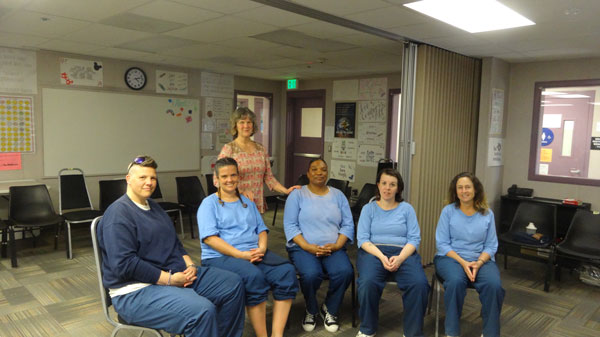
This project produced one of the most important published studies of Transcendental Meditation with women. It was conducted at Coffee Creek Correctional Facility, Oregon’s primary women’s prison, and was published in The Permanente Journal in 2017. In the randomized controlled study, female inmates who learned Transcendental Meditation experienced significant reductions in trauma symptoms after four months
of practice. Research data showed improvements in intrusive memories, hyperarousal, and overall post-traumatic stress symptoms, with approximately 80 percent of participants showing meaningful clinical improvement. Inmates reported reductions in overall trauma symptoms, intrusive memories and thoughts, and being “on guard,” jumpy, unable to relax, or having trouble sleeping. They commented that they felt calmer, had more hope, could step back from anger, and had greater self-awareness.
The Actors Center
Founded in 1996, the Actors Center is a non-profit organization in New York City that serves as a creative sanctuary and professional hub for actors. The Transcendental Meditation program involving actors is especially interesting because the actors’ interest in benefits is not as much about trauma or rehabilitation, but on enhancing creativity, performance, confidence, and emotional resilience in a profession built around public scrutiny and frequent rejection. Starting in the early 2000s, participants included stage, television and film actors. They subjectively reported reduced audition anxiety, greater performance confidence, increased creativity, better concentration and memory, less emotional fatigue, and more resilience during periods of unemployment.